
On Failure
(or on the hope that nobody should read this)


I hear the thud. The man must have been so tired of whatever banalities piled up like unwashed laundry in his life, he just couldn’t take anymore. So, in 1947, he goes to a cafe in Brooklyn, New York and thud. Lucky for us, Henri Cartier-Bresson was there to photograph the moment.
Ever since I saw the photograph while reading a book by the endlessly amusing School of Life, I recalled the desire to write about the f-word without making it sound like I had imbibed a gallon of sour grape juice. You’d think that that f-word is titillating enough but wait till you start talking about your failures at a party. Their gaze takes a swift turn from curiosity to pity to horror in seconds. We talk about everything under the sun with rapt interest except how we made utterly disastrous choices, failed at expectations, and bungled our way through lives. Incontinence is pitiable. But failure? Failure is unacceptable.
Ever had a conversation recently where your present success feels more potent when spoken near someone who lacks what you achieved? It is deeply uncomfortable to think that we might harbor anything other than selfless joy through vicarious celebration of the successes of our peers. And yet, grind your teeth as much as you want to, God forbid lest we catch this contagion and become what society despises the most: a loser. You do not want to be that man who banged his head on the cafe table.
It’s not enough for me to succeed—others have to fail.
(Source unknown but attributed to Rochefoucauld, Somerset Maugham, Gore Vidal, and even Genghis Khan and the last one makes more sense to me)
Throughout humankind’s history, the vanquishers, heroes, conquerors, and winners have been celebrated in folklore, myths, fables, pop songs, and cinema. We want Butch Cassidy and the Sundance Kid to win. Perhaps the Japanese anime comes close to a cultural omnibus that touches the grisly whiny bits of the human condition. Plus, there was that guy called Hamlet. Otherwise, losers don’t have songs. So, a couple of years (?) ago, came to my rescue, a merry (*cough*) band of Romanian thinkers, out of the gloomy Wallachian mountains with their crepuscular beliefs laced with dark treacle wit that made me laugh till my stomach hurt.
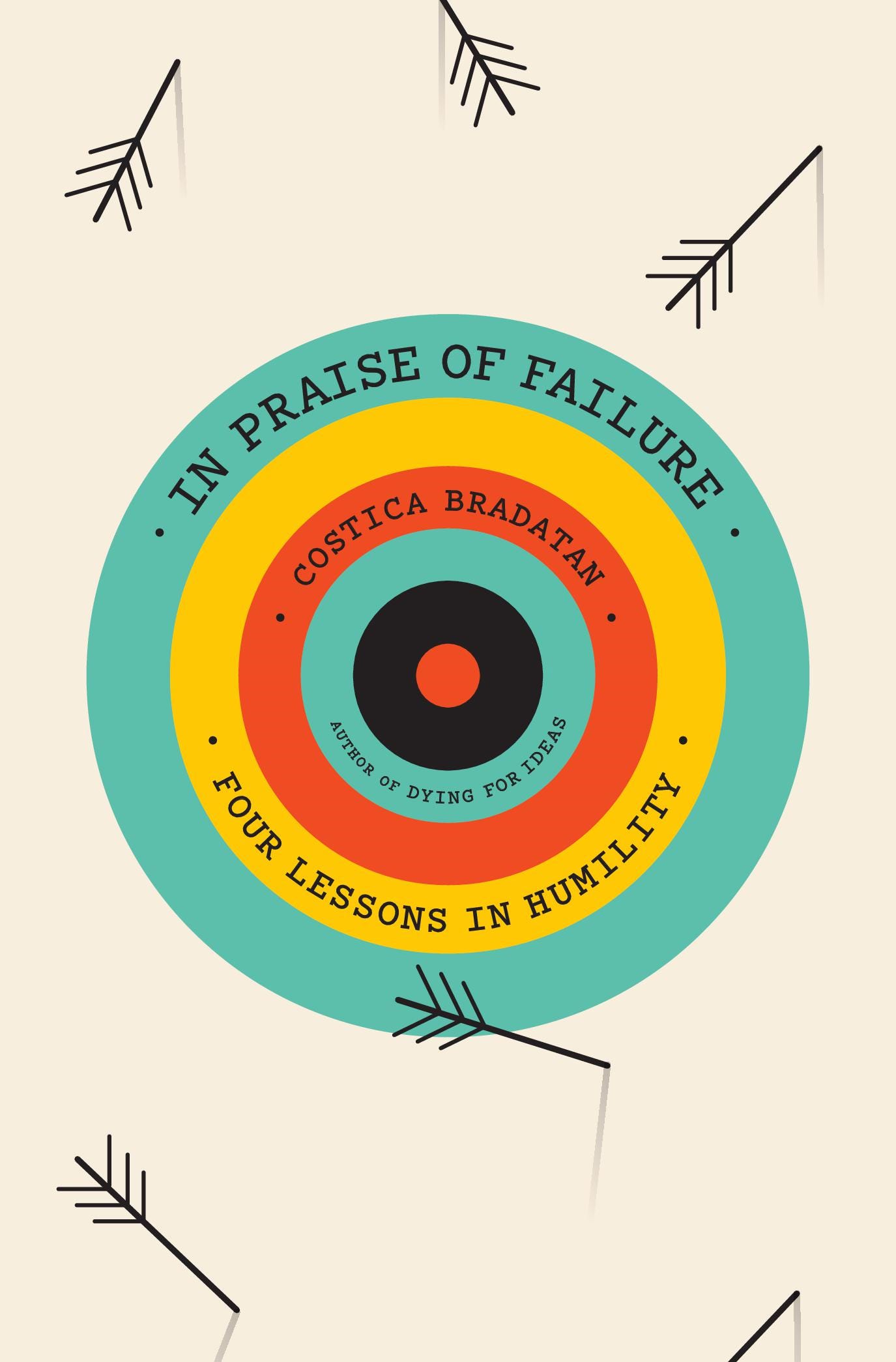
While reading Costica Bradatan’s In Praise of Failure, it became abundantly clear that failure is inextricably linked to the metaphysical question—who are we and why are we here—as opposed to what have we achieved. My god, the joy to arrive at this point in one’s understanding. And am not sure anyone has the answer because the point of failure is not to provide anyone with answers.
Failure is the sudden irruption of nothingness into the midst of existence. When we experience failure, we start seeing cracks in the fabric of existence and the nothingness that stares at us from the other side. Failure reveals something fundamental about the human condition: that to be human is to perform a tightrope walk with no safety net. The slightest wrong step can throw you off balance and send you back into the abyss. As a rule, we perform our tightrope walking blissfully unaware of what we are doing, like a sleepwalker. To experience failure is to wake up suddenly—and to look down.
Not many decades ago, going broke or bankrupt or losing a job was considered as a failure. These days, unless you are adjudicating yourself at the altar of growth metrics—don’t see the point of your existence. And this sheer breathlessness of the growth culture has rendered zero space for giving failure a chance to make its case. Bradatan does so.
That’s precisely the moment when failure turns out to be a blessing in disguise. For it is this lurking, constant threat—the abyss below—that should make us aware of the extraordinariness of existence: that we exist at all when there is no obvious reason why we should. Coming out of nothing, and returning to nothing, human existence is a state of exception.
And if the yogic prose here doesn’t make you pause, remember that the ancients understood the role of losing everything. The Greeks built an entire genre of tragic drama—Aeschylus, Sophocles, Euripides—to recount that respectable, honorable, and intelligent men and women, like us, made minor errors in judgement which led to catastrophic consequences including death. The audience sat rapt in these elaborate stage plays realizing it could very well be them! We lost that touch with the losing side. But few thinkers made failure their business.
The Romanian language has many words associated with failure. One of the verbal constructions most often used in Romanian, is n-a fost să fie—literally, “it wasn’t to be,” implying predestination. And the man who lived this philosophy was Emil Cioran. Romanian-born French thinker, Cioran(1911-1995) is famous for his aphorisms. Fragments of delightful and deep introspection with a touch obsessed about the nature of failure feature in his books All Gall is Divided and The Temptation to Exist. These “fragments” were more than a writing style; he called himself un homme de fragment. I think his distaste to associate himself with any school of philosophy makes him all the more interesting. Privatdenker (German for "private thinker"), he called himself, an alternative to the word “philosopher”. And a true thinker he was. On that matter, he says:
True thinking resembles a demon who muddies the spring of life or a sickness which corrupts its roots. To think all the time, to raise questions, to doubt your own destiny, to feel the weariness of living, to be worn out to the point of exhaustion by thoughts and life, to leave behind you, as symbols of your life's drama, a trail of smoke and blood - all this means you are so unhappy that reflection and thinking appear as a curse causing a violent revulsion in you.
― Emil Cioran, On the Heights of Despair

When Cioran went to college in Bucharest, in the late 1920s, he was met with the city’s young intelligentsia, who crowded the city’s cafés, spent all day talking philosophical nonsense, and reveled in procrastination. At first, Cioran was taken aback at this waste of time and energy. But later in a letter he wrote:
In Bucharest I met lots of people, many interesting people, especially losers, who would show up at the café, talking endlessly and doing nothing. I have to say that, for me, these were the most interesting people there. People who did nothing all their lives, but who otherwise were brilliant.
However, Cioran’s ultimate failure in hindsight was his enthusiasm, support, and political involvement with the Nazi party as a fuck-you to the stagnancy of a placid democratic Romania. He spent all his life trying to cut his identity with Romania so much so that he changed his name to E. M. Cioran. He separated himself from academia, could never keep a job, and found the fascist pomp of vigor and virility as a reflection of true change in human history. Till the end, he never endorsed the idea of liberalized democracy.
It is farcical and perhaps will remain undiagnosed as to why the young Cioran did not see the dangers of rising mass hysteria and military mobilization in Germany. He even endorsed Romania’s own fascist movement, the violently anti-Semitic Iron Guard from September 1940 to January 1941. Again, what was this man thinking? His later works speak vaguely of the shame and dilemma of his actions during the 1930s-40s but perhaps it was too late. Trying to understand his split personality remains one of my many doubts in life.
“This is because failure, always essential, reveals us to ourselves, permits us to see ourselves as God sees us, whereas success distances us from what is most inward in ourselves and indeed in everything.”
― Emil M. Cioran, The Trouble With Being Born
Not all Hollywood is made of success stories. M. K. Gandhi met Charlie Chaplin in London in 1931. Much trepidation existed in Gandhi’s mind as they had never met before. But when Chaplin heard Gandhi’s critical views of modernity and technology, it indirectly led to the idea for Modern Times. And with it, rose the cult of the Little Tramp. Bradatan in his book uses the “tramp” as a palate cleanser next to Cioran’s relentless pessimism.

Modern Times (1936) is a socio-economic commentary on American society during the 1930s, same time as Cioran was enamoured by the Nazi party, a time of increasing industrialisation against the devastating effects of Great Depression. For me, the movie is not funny. Little Tramp rolling inside giant metal cogs gives me a sense of desolation. Perhaps a little too familiar as Bradatan tries to visualize the Tramp’s place in contemporary world.
Wherever he finds himself—at the assembly line, in prison or in a café, taking a rest in a posh neighborhood or strolling down the street—Little Tramp, as the social portrait of the loser, performs the same function: he embodies his society’s worst fears and anxieties. Nothing is more unsettling for a society addicted to work and the pursuit of wealth than the sight of slacking. Slackers, writes Tom Lutz1, “represent our fondest fantasies and our deepest fears.” Unemployment, homelessness, starvation, insanity, criminality, dissolution, failure—Little Tramp is supposed to exorcise them all.
And yet his entire personality is unadulterated sunshine. Won’t it be nice to be the Little Tramp? Caring, compassionate, curious? But the machine spits him out. He has too much artiste in him and still possesses an iota freedom for wonder that the industry hasn’t engulfed. My understanding of Bradatan’s inclusion of Charlie Chaplin in the book is this: the Tramp’s portrayal of a loser, even though a happy-go-lucky one, is a warning story. Perform or fade away in the ignominy of penury. And this is why humans are relentlessly in pursuit of not becoming the Little Tramp even though seeing one’s way through this paradox—that a little failure can be a freeing agent—might help relieve our souls of the desperation to constantly prove ourselves.
In September 1927, a young police officer working for the Indian Imperial Police in Burma resigned his well-paying position while he was on leave in England. Eric Blair wanted to travel and to become a full-time writer. He lived in tramp hostels, under the bridges of London and Paris, and did poorly-paid jobs. And yet, observing the architecture of poverty in these cities made him one of the greatest political writers of all time. Before becoming famous, George Orwell, was destitute.
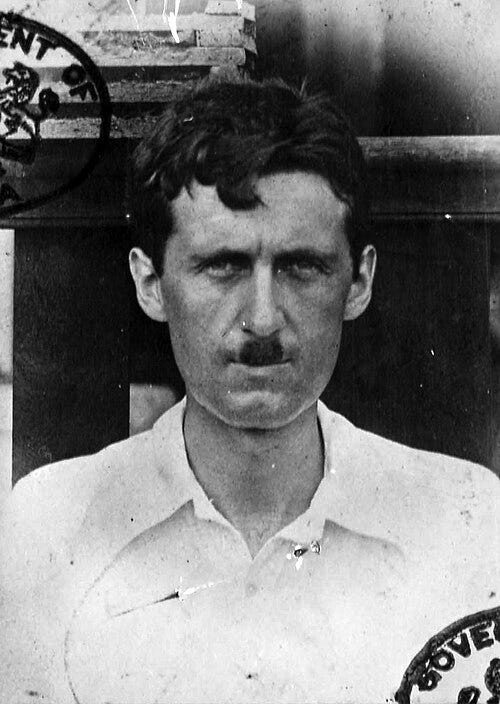
You thought it would be terrible; it is merely squalid and boring. It is the peculiar lowness of poverty that you discover first; the shifts that it puts you to, the complicated meanness, the crust-wiping.
Orwell writes in Down and Out in Paris and London, published in 1933, which documents his tramping years. The crust-wiping maybe the key epithet for the ingenuous distaste associated with losers. Bradatan provides you with another layer of the “tramp” archetype here with Orwell’s literary distinctions—a mark of his evolution as a writer—when he describes the poor of Paris and how the rich (insert every privileged image you have ever had) respond to poverty despite their best intentions. Noble even.
Intelligent, cultivated people, the very people who might be expected to have liberal opinions, never do mix with the poor.
These experiences when compared to Chaplin’s cinematic screenplay restate the importance of an education of different kind—living with failure. Not as a theatrical experiment, not as a philosophical discourse, but simply because life handed you those circumstances in a stroke of randomness with some urgency to learn and write about the world. No university could have taught Orwell what he learnt while tramping.
Only he could have written 1984.
There is a deliberate omission of my personal failures in this missive. It took me a year and a half to start writing about this. Bradatan’s book was kindly sent to me by Harvard University Press. But I was lost after finishing the book. Could I write about failure without the horror of navel-gazing? There were things to do. Desaturating the way I color my worldview about successes. Disenchanting myself from a quixotic fable that miraculously rescues me from my plights. The f-word strikes everyone, everywhere. There is no grand plan—just being here is as good as it gets.
Tom Lutz, Doing Nothing: A History of Loafers, Loungers, Slackers, and Bums in America (New York: Farrar, Straus and Giroux, 2006), 102.
“There is no grand plan—just being here is as good as it gets.” As I contemplate a big decision and am uncertain where either path will lead, I find myself coming again and again to this same conclusion. I could tell my story as a series of decisions that have led to where I am and make it sound either successful or like a failure, depending on what I include or exclude. I think most of us could. But the reality is that I’m just here. I think most of us are.
It is refreshing to read this after lifelong rhetoric of the clichéd comment “Failures are the pillars of success”.