
I was Carmy
Method and Madness in High-Functioning Labs and Kitchens

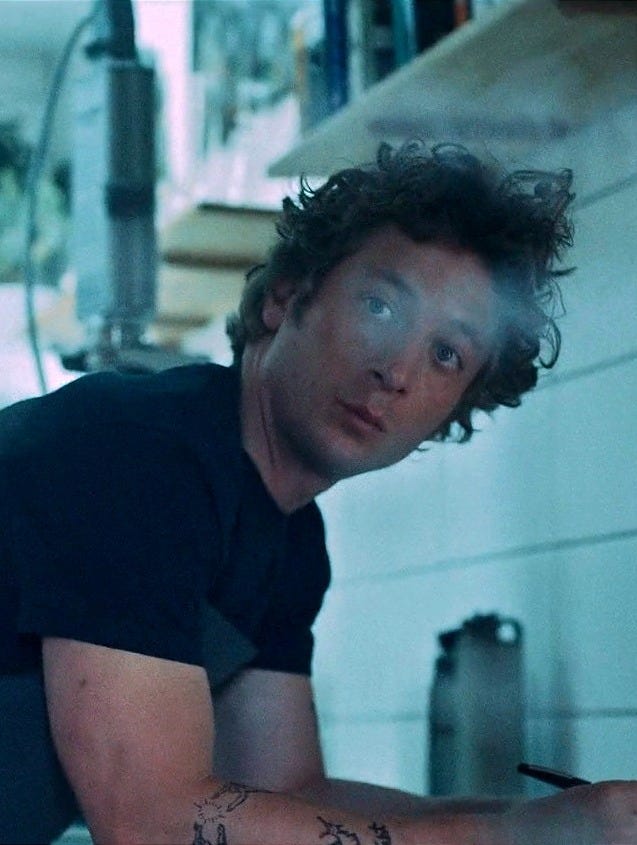
Now that FX’s series Bear has ended, I can talk about it. Series creator Christopher Storer left us a cacophonous and resplendent television series of family drama, precision work cultures, communal strength, spectrum of human creativity, and some of the most thoughtful redemption arcs ever written. The show revolves around Carmen Berzatto (career-defining role for Jeremy Allen White), a world-renowned fine-dining chef, who returns to Chicago after the tragic death of his brother Michael (Jon Bernthal, whose cameos are always electric in this show) who has left him their family-owned Italian beef sandwich restaurant—The Original Beef of Chicagoland. Carmy transforms the place alongside co-chef, Sydney Adamu (also a career-defining role for Ayo Edebiri) and many other original staff members, to a Michelin-starred fine-dining destination called The Bear in the final season. That’s about it.
Hmm. Not quite.
When the third season of Bear premiered in 2024, I was expecting the usual culinary anxieties against a Chicago montage in the first episode weirdly named as “Tomorrow”. I expected Richie (Michael’s best friend and played by an ebullient Ebon Moss-Bachrach ) snarling “Cousinnnnn” at Carmy while managing the front of the house. But it ended up being the most uncomfortable yet beautiful episodes on television I had ever seen. This was the first time I saw the mechanics of a high-functioning restaurant visually depicted as a mirror image of working in a biochemical wet lab.
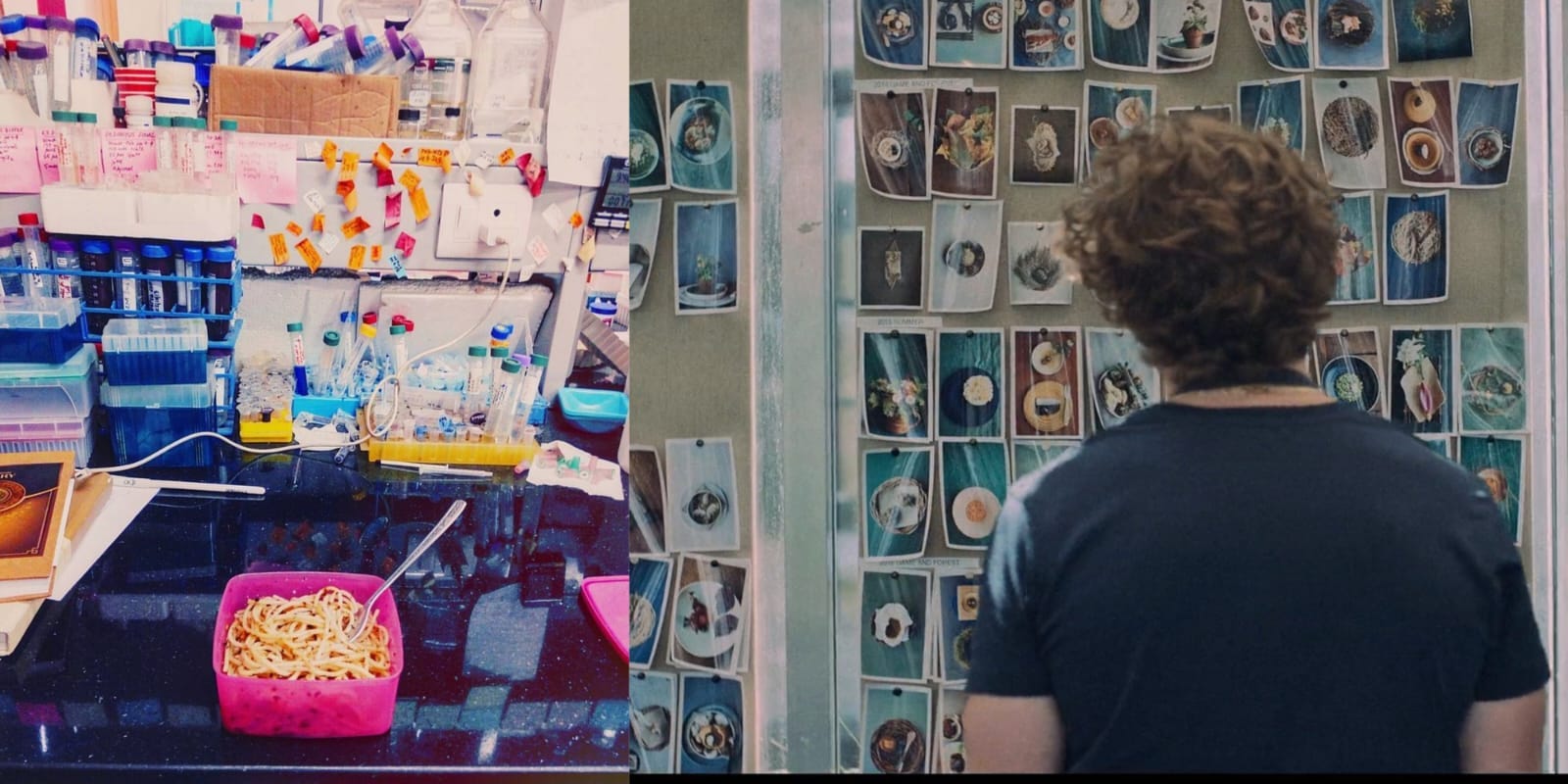
Following is a very lengthy, fragmented, stream-of-consciousness photo essay divided into various stages, methods, emotions, and memories that I analyzed while I re-watched the series recently. I appreciate if you are here reading it. Thank you for your patience.
1. Carmy’s Creative Soul
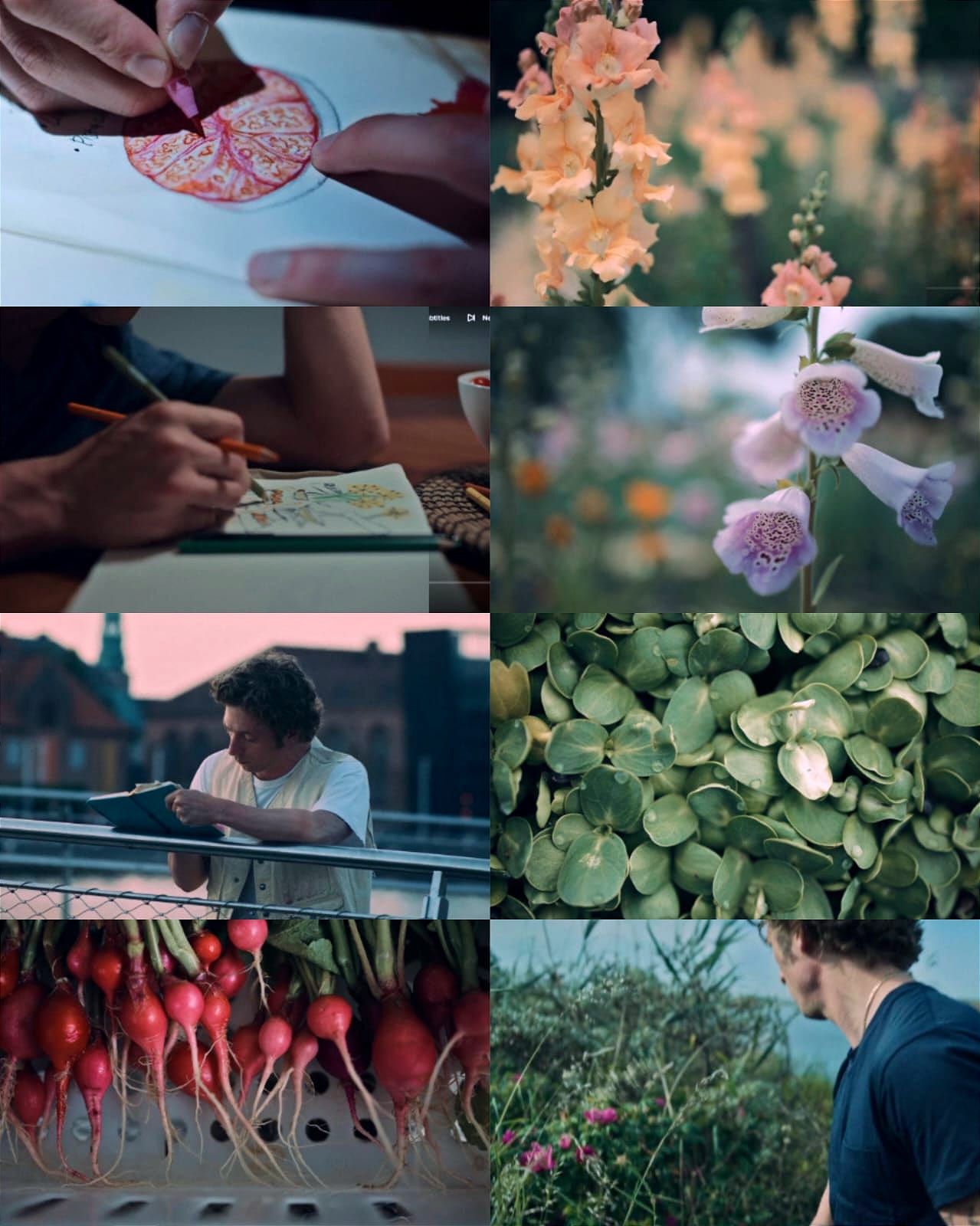
Recipe diagrams, flowcharts, lists, colored pencils: Carmy’s obsession with food is nourished by his love for art. When he visits Copenhagen, he seems to inhale the flowers and herbs in the gardens. Those scenes are the few occasions I saw a flicker of smile on his face. This is the exact scaffold inside my mind I had since I was a kid. Throughout high school and college, I made illustrations with colored inks which helped me visualize concepts before I could verbally memorize it. The images in notebooks or book chapters transplanted themselves as whole “plates” and nothing else was needed.
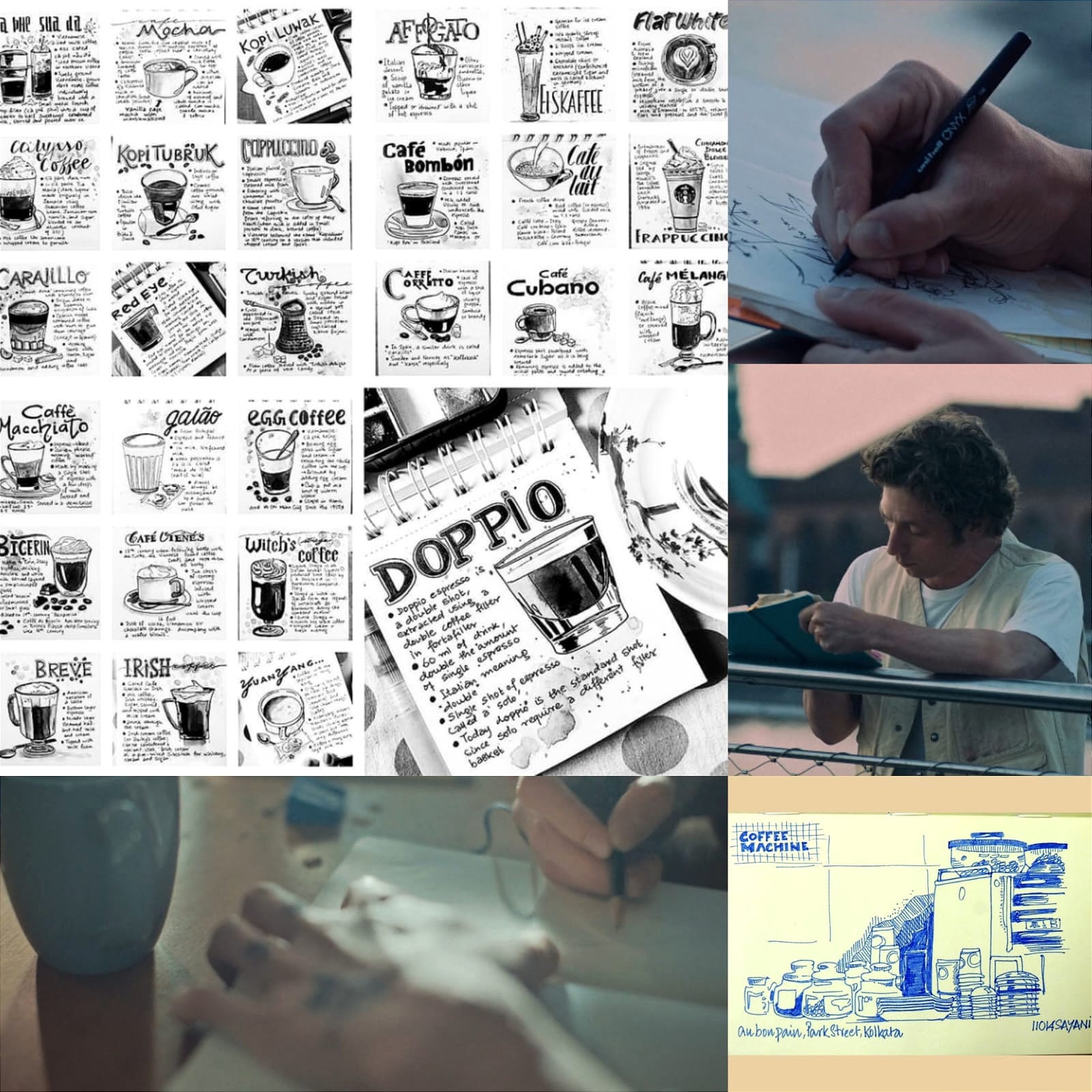
For a few years, every morning before going to the lab, I used to draw. One drawing every day to get me out of my head and exhale. The difference was that Carmy was designing recipes whereas I was trying to mentally prepare myself for the other shoe to fall in the lab. I have tons of notebooks from grad school days filled with sketches of things that made me happy. Eventually, these coffee sketches became a series.
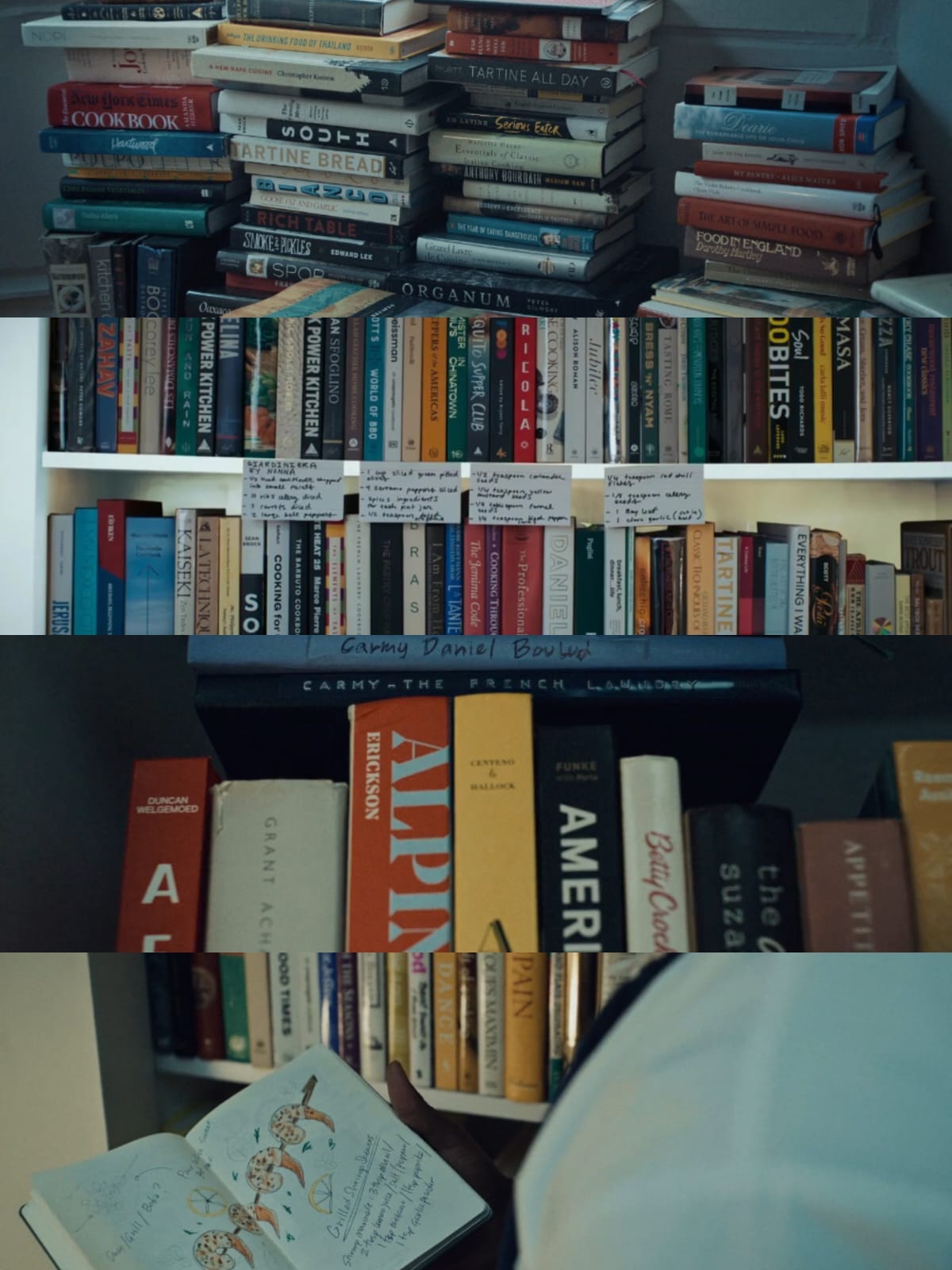
And when you take a break from nature, read books. Read academic articles and reviews and learn from those who came before you. Study theses, dissertations, collate the necessary knowledge bank. Just like Carmy’s bookshelves.
2. Repetition and Multitasking
Preparation
Protocols, pipetting, prepping, pruning, plating. Over and over, day and night, Christmas and birthdays. I have done it all.
Chopping, peeling, de-seeding, reducing, blanching.
Weighing salts, making buffers, growing cultures, cloning, sequencing, protein prep.
Until your muscle memory starts becoming your identity. And for the love of God, labelling. Starting everyday with labels and Sharpies.
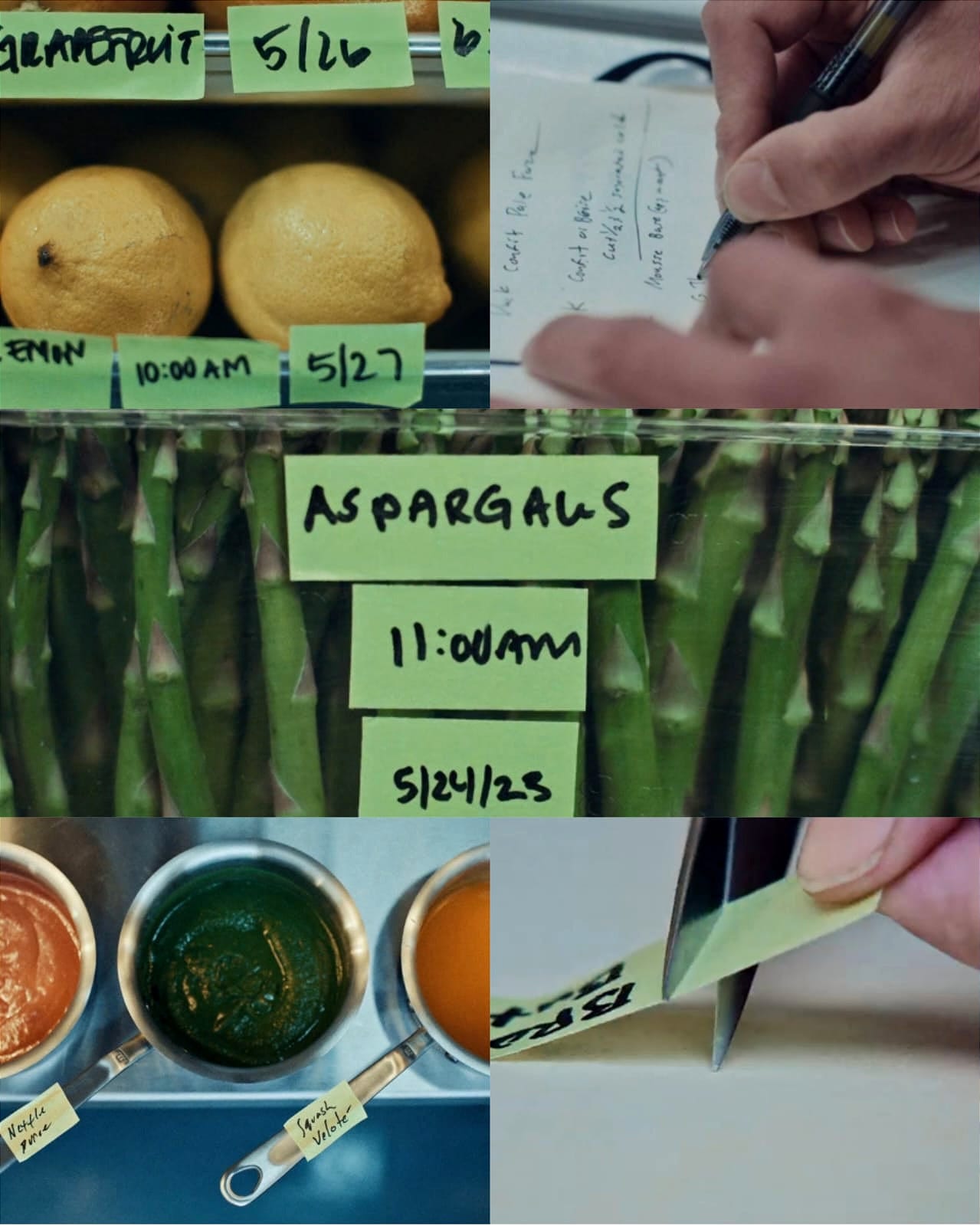
After two years of picking up microscopic protein crystals in a lab or micro-radishes in the kitchen, your body knows the choreography before your mind does. Multitasking becomes your second nature. It’s like being part of an assembly line where your hand is a mechanical arm calibrated for an ultra-specific task like dribbling 2.5 microlitres of a dye in a narrow cavity of a wobbly transparent gel slab floating in a fluid bath.
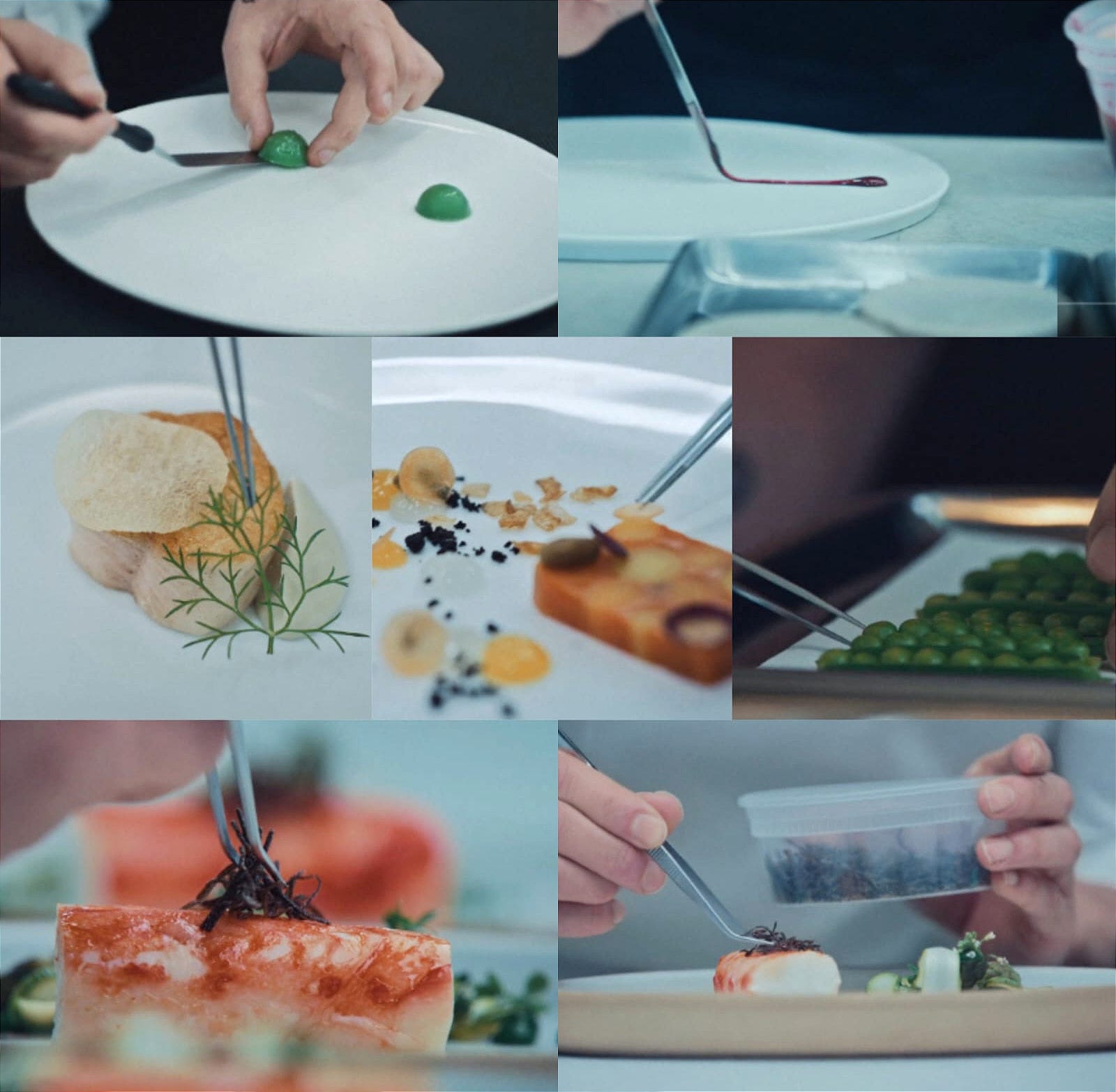
Also, I missed pipetting watching the chefs plate microgreens and edible flowers with tweezers!
Time Management and Speed
Imagine baking cakes for 78 slices and frying 54 chickens. It is not fun. At one point, I was running 20 gels after doing assays with 12 different versions of protein mixtures every day for two months. Repetition is your friend for minimizing errors. Meanwhile, the damn timers go off at various times and you have to keep track of them in your notes while adding ingredients/buffers, and restarting timers during the cook/experiment. Yes, every second counts.
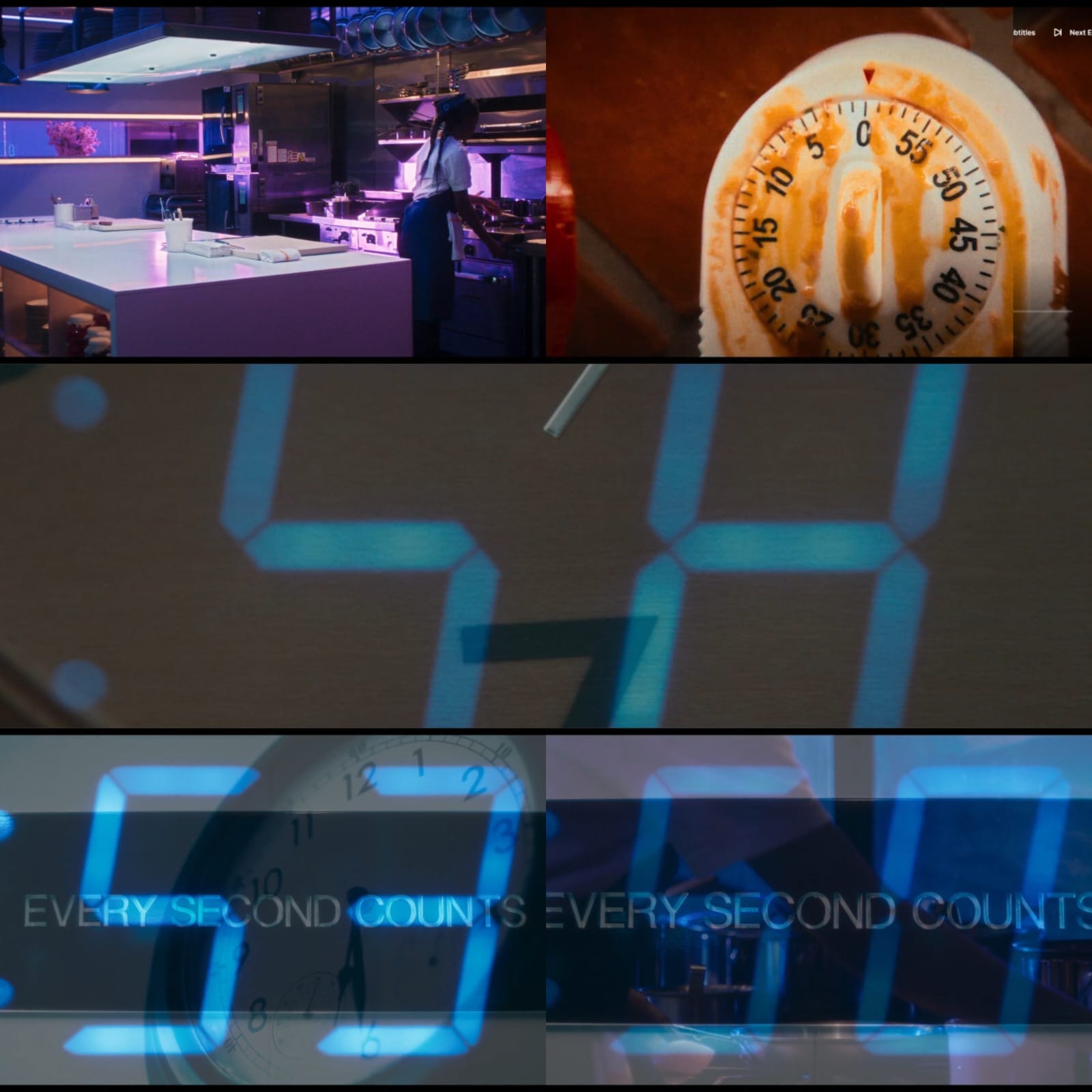
Sometimes, things get scary and you get dizzy while multitasking with so many components to manage all at the same time. Sauces can burn, steaks can overcook. Instruments can break down, proteins can degrade. You have to step away from the desk to centre yourself, but you have this unwavering faith that your hands will never tremble once you begin again. These skills you acquire are like swimming or cycling or playing violin.
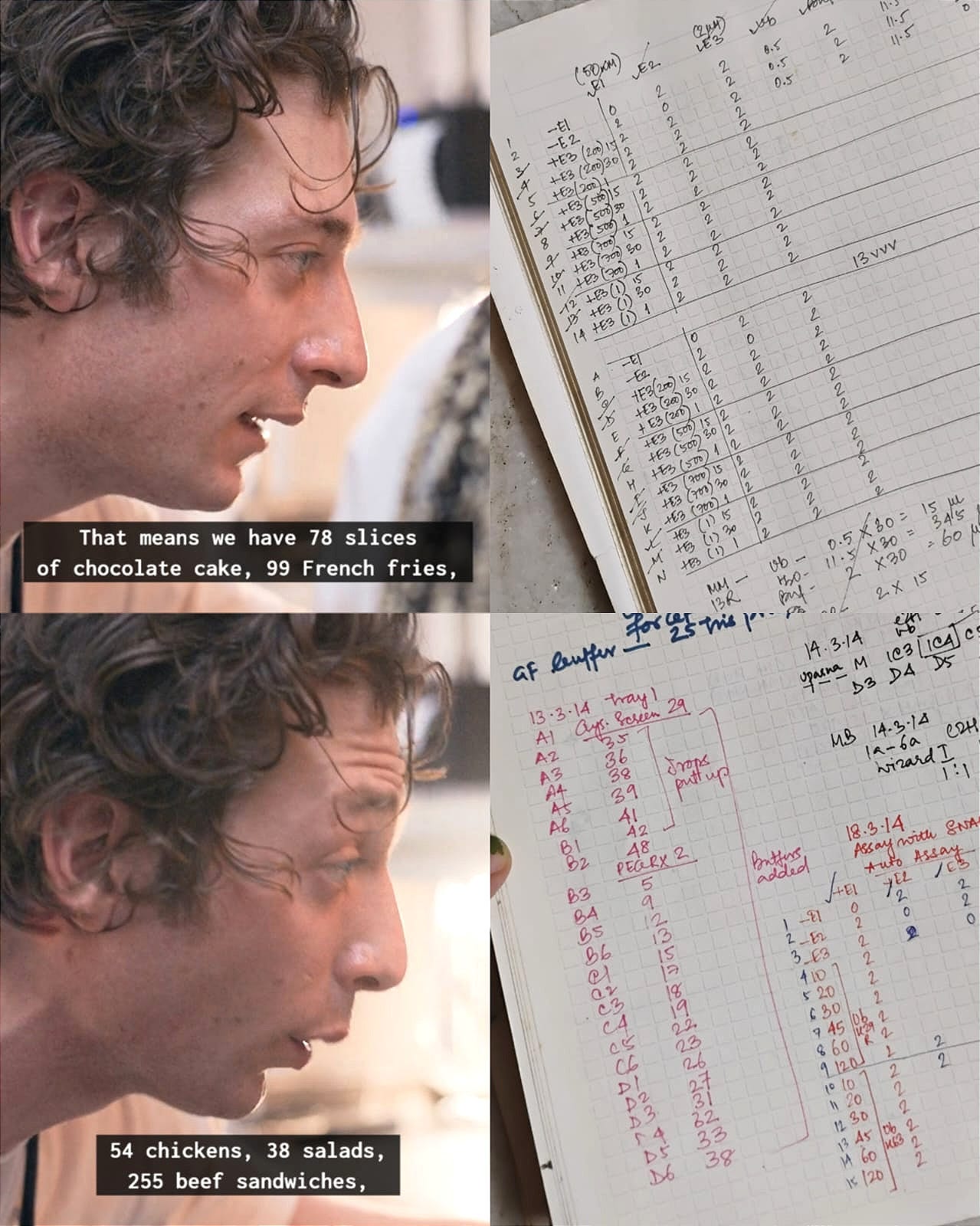
There’s a scene in the show where Carmy is shelling peas while working in Chef Andrea Terry’s (an unforgettable Olivia Colman) restaurant Ever, and people around him are quite shocked to see the speed with which he fills his bucket of peas. That’s the kind of speed on the bench not just required but necessary while working with time-sensitive complex proteins in vitro. Also, the prep never ends. There’s always another component required before you enter the final stage of cooking/experimenting.
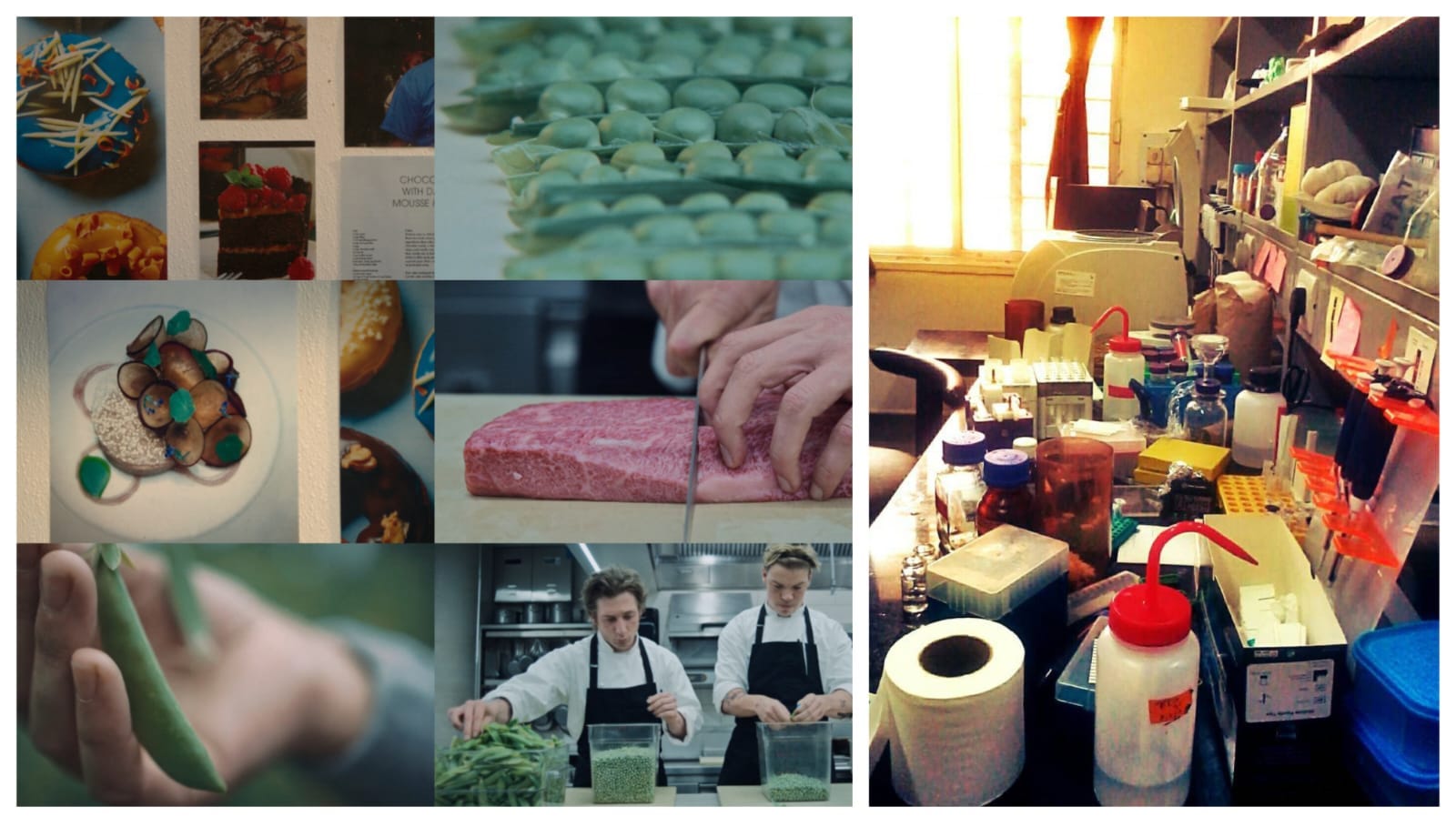
Cleaner Your Stations, Leaner Your Output
Did I forget cleaning? Wipe, clean, dust, sweep. The smell that comes from spilled bacterial culture will turn your ancestors in their graves. Not to mention the buffers and noxious acid spilling on desks. The team in Bear keep running out of teaspoons. We kept running out of clean and dry test tubes in our lab.
And let’s not even begin with fungal contamination; the death knell of biology labs. So, we keep our stations clean, wash those tubes, beakers, measuring cylinders, dry them in the oven for next day, and we do an annual deep clean of the lab as a team. Hustle!
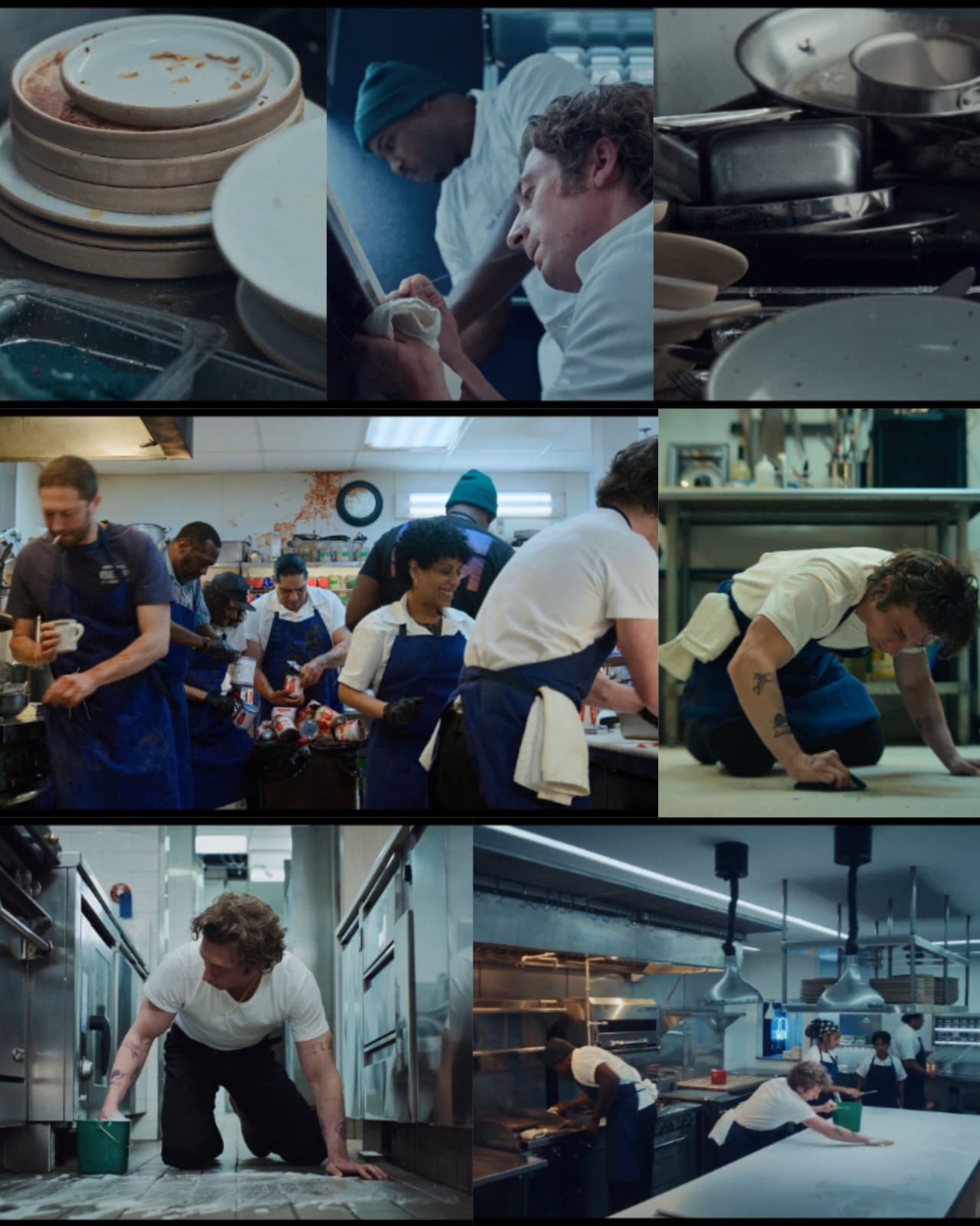
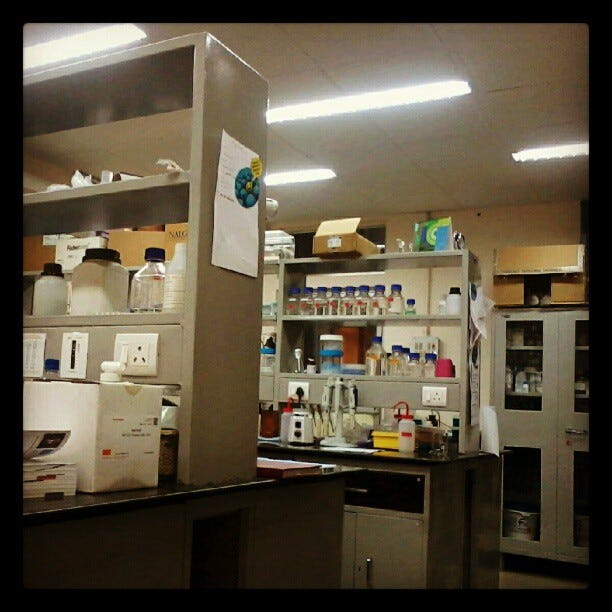
I admit I was a bit of a weirdo. Every night, however late that might be, I would wipe my desk so much that you could see your face on the granite slab. I was addicted to cleaning my hands with alcohol before picking up something to work with.
When the world went quiet in the late evening with assays finished and gels scanned, against the gentle hum of refrigerators and chromatography systems sighing like sleeping dragons, cleaning my station was the reset I needed.
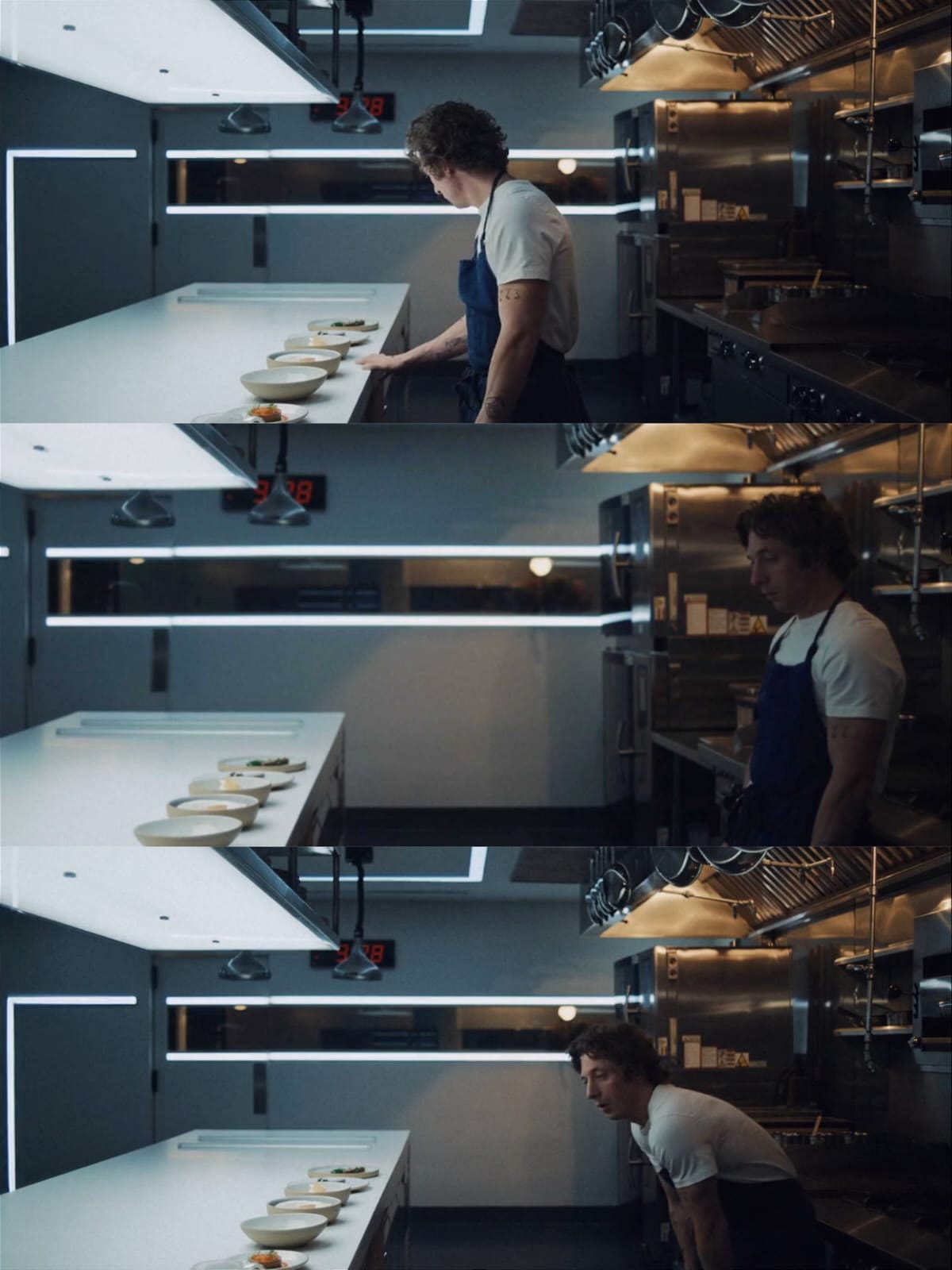
3. The Fuckups
That Time When I Almost Blew Up a Centrifuge
Technically, certain labs would have thrown me out for technical negligence. But watching Carmy set fire to the stoves or getting stuck inside the cold fridge walk-in on the night of his restaurant’s opening made me feel less alone.
It was Year One of grad school. I was very green, learning multitasking, trying to handle four tasks simultaneously, when I forgot to put the lid on our high-speed floor centrifuge. This particular centrifuge model could run up to 20,000 rpm in the lab. If these instruments go wrong, they can cause architectural damage and injure people.
Luckily, that day, it was running at 5,000 rpm. It started groaning as soon as I switched it on. I damaged a part of the centrifuge which was replaced but that day I was not only scared, I felt like I had moved out of my body and was watching the disaster unfold from a distance. I was so tightly wound up in order to perform flawlessly that my system fractured under pressure. My nervous system was taking flak for making precision a religion.
I was also infamous for breaking quartz cuvettes (expensive quartz glass vials used in spectroscopy experiments) in the institute and heard people talk shit about me behind my back. Not my best moments. Although, these incidents never happened again.
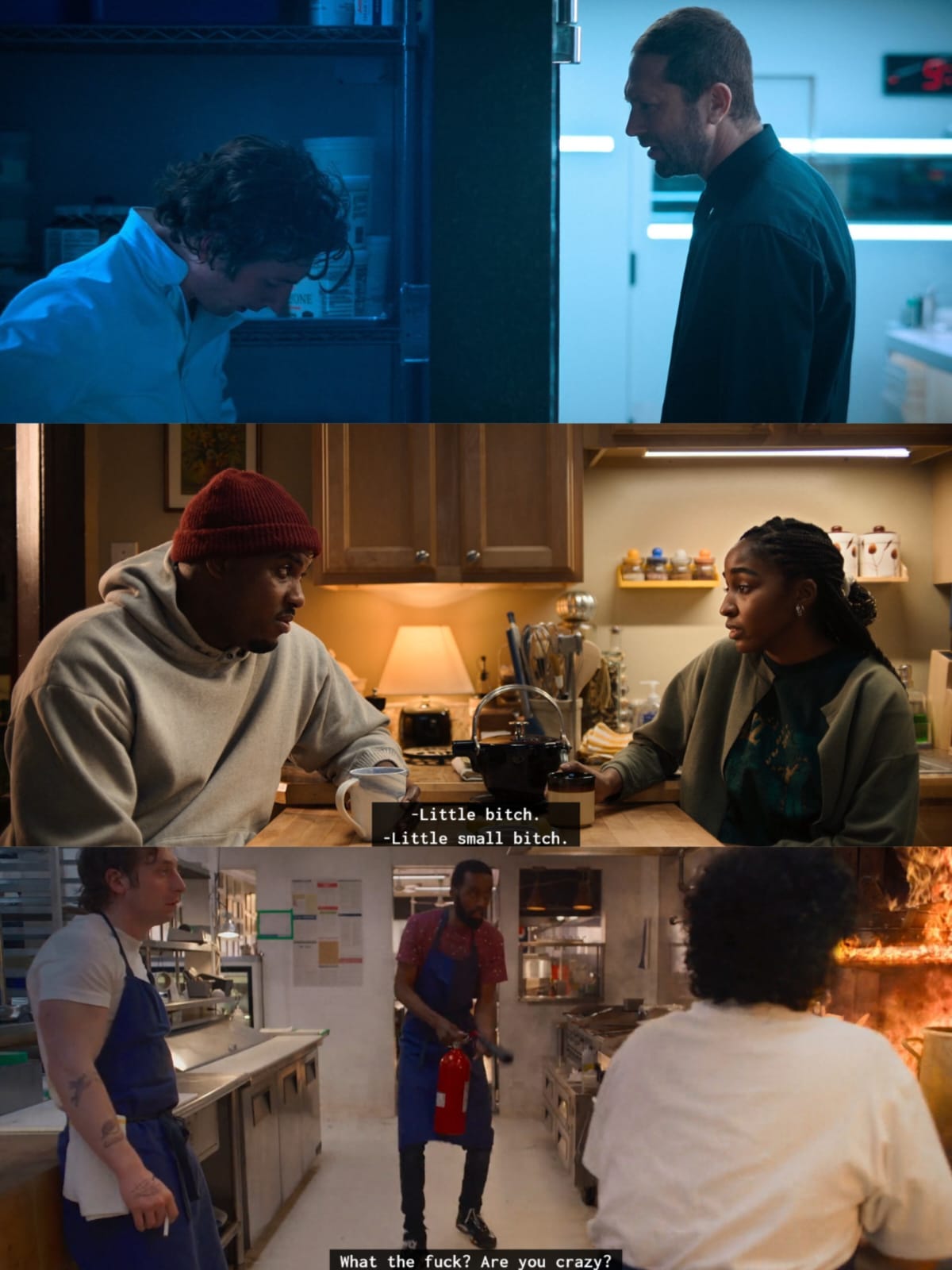
4. Path To Beauty Via Precision
Once cooks and would-be-scientists get the hang of their myriad protocols and methodologies, it’s time to generate data as fast as possible because of the competitive nature of these industries. It is not enough to have designed the experiment to support your working hypotheses, it must have minimum statistical errors, ensuring your research conclusions are accurate, reproducible, and robust. Because reproducibility is a minimum benchmark of good experimental data (and has been seeing a lot of problems in modern research landscape).
“If it’s not perfect, it doesn’t go out, okay?”
Carmy says to Sydney about an imperfectly fired T-bone. Something I had heard a thousand times about my paper if not less.
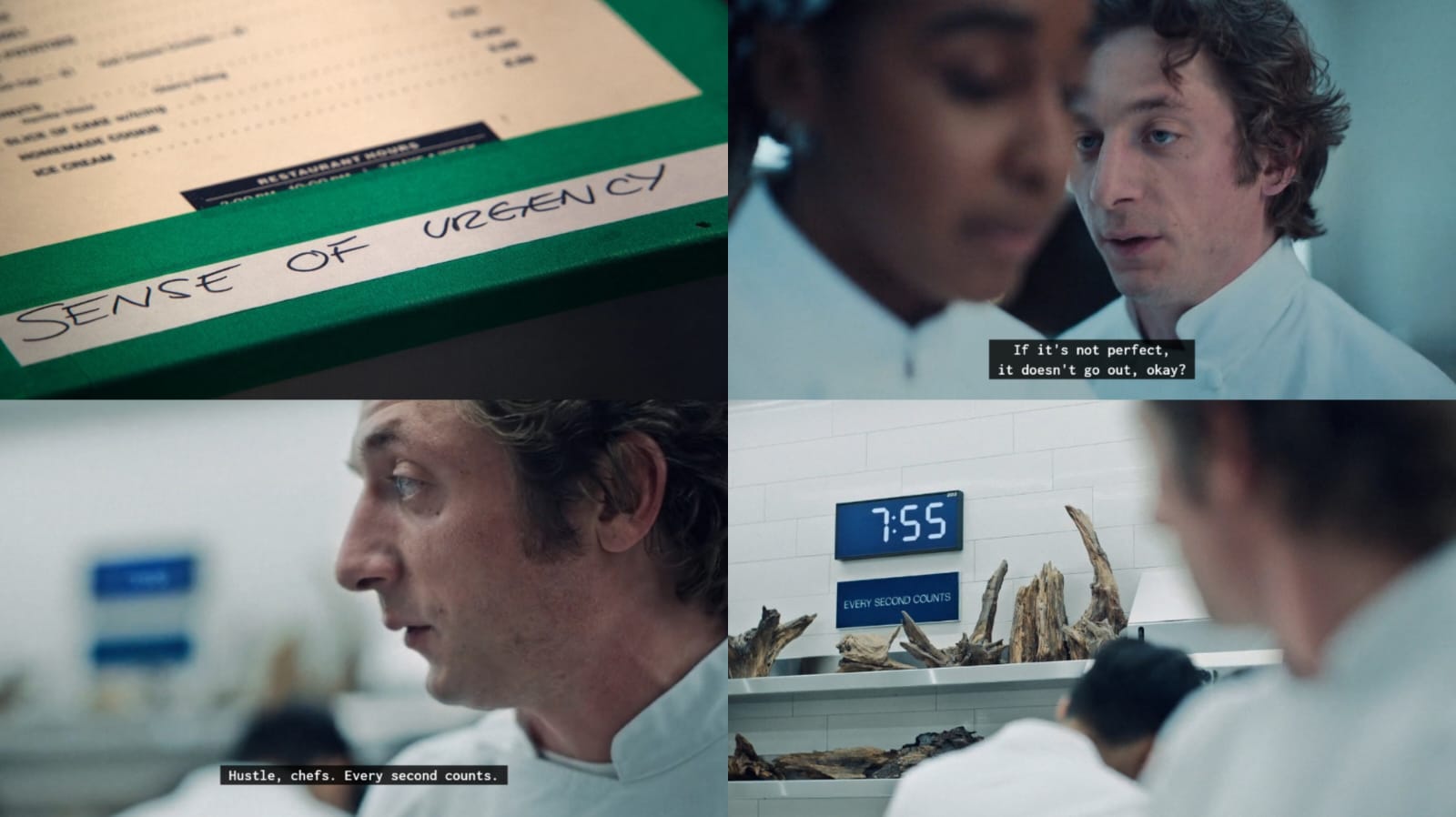
BUT, what even is good data? Where does the quest for perfection end? Because perfection in scientific experiments is statistically impossible.
Despite that, I once treated low variance as aesthetic truth.
Looking at my gel pictures and plotted data after many years alongside Carmy’s final lineup of dishes is a quiet revelation. The closer data points in these fluorescence curves clustered around the mean, the more beautiful they appeared to me. Tight error bars felt like victory. After all the sacrifices made over thousands of hours, these little figures catapulted my self-worth. Small standard deviations felt elegant. And don’t I love elegance?
Lab work trained me for a temperament. It’s like a signature you cannot revert back. Not as a perfectionist but calibration of my working style towards precision with as much focus as possible.
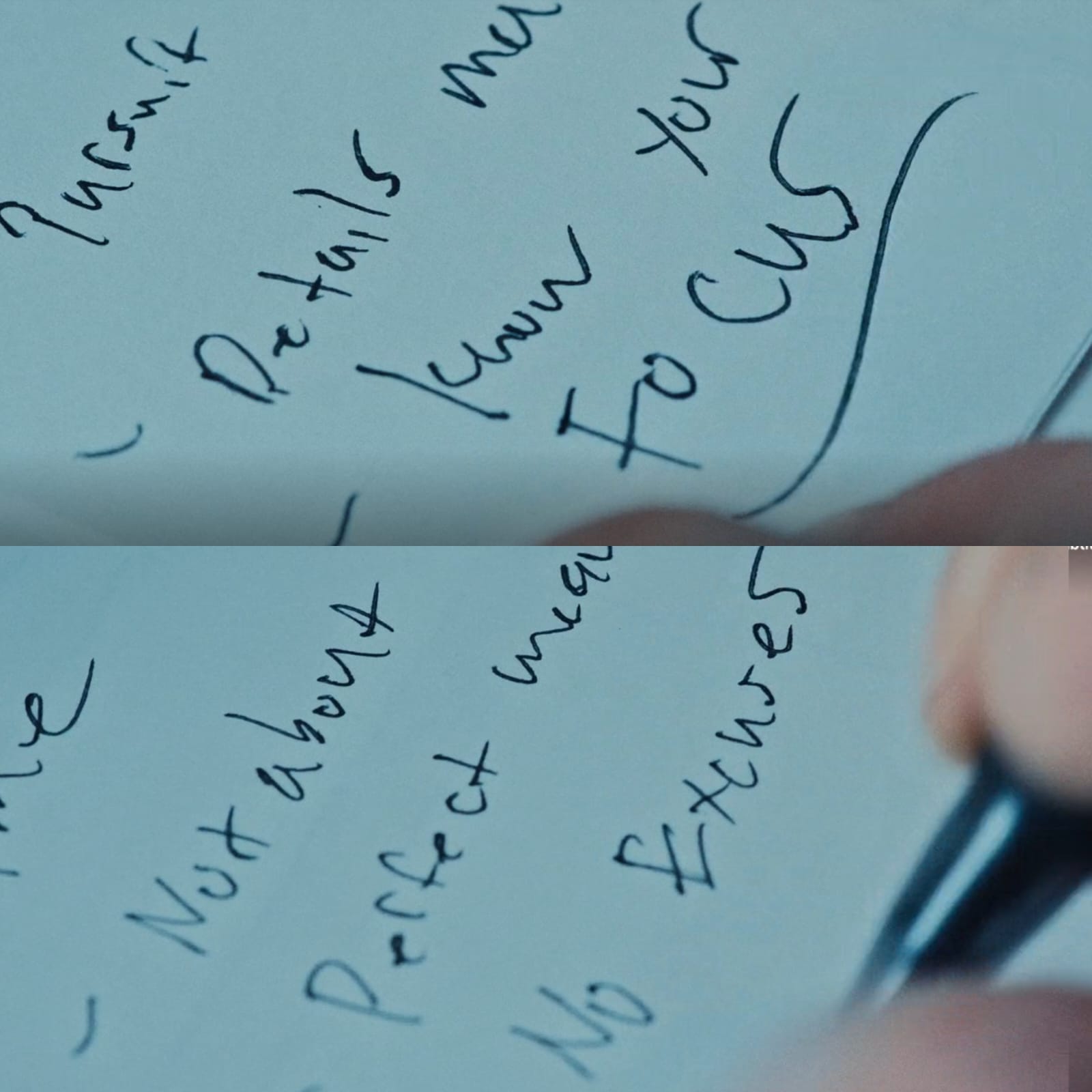
And there comes a time when you spend enough time as an apprentice, you reach a stage where you start training other people. Temperaments tend to blend at this point. The student becomes the mentor. It’s a strange sensation to realize that maybe you subconsciously acquired some of your mentor’s quirks. Maybe you have those exacting standards but those long years taught me to be open to adjustments with generosity from those still in training.
5. Rebellion
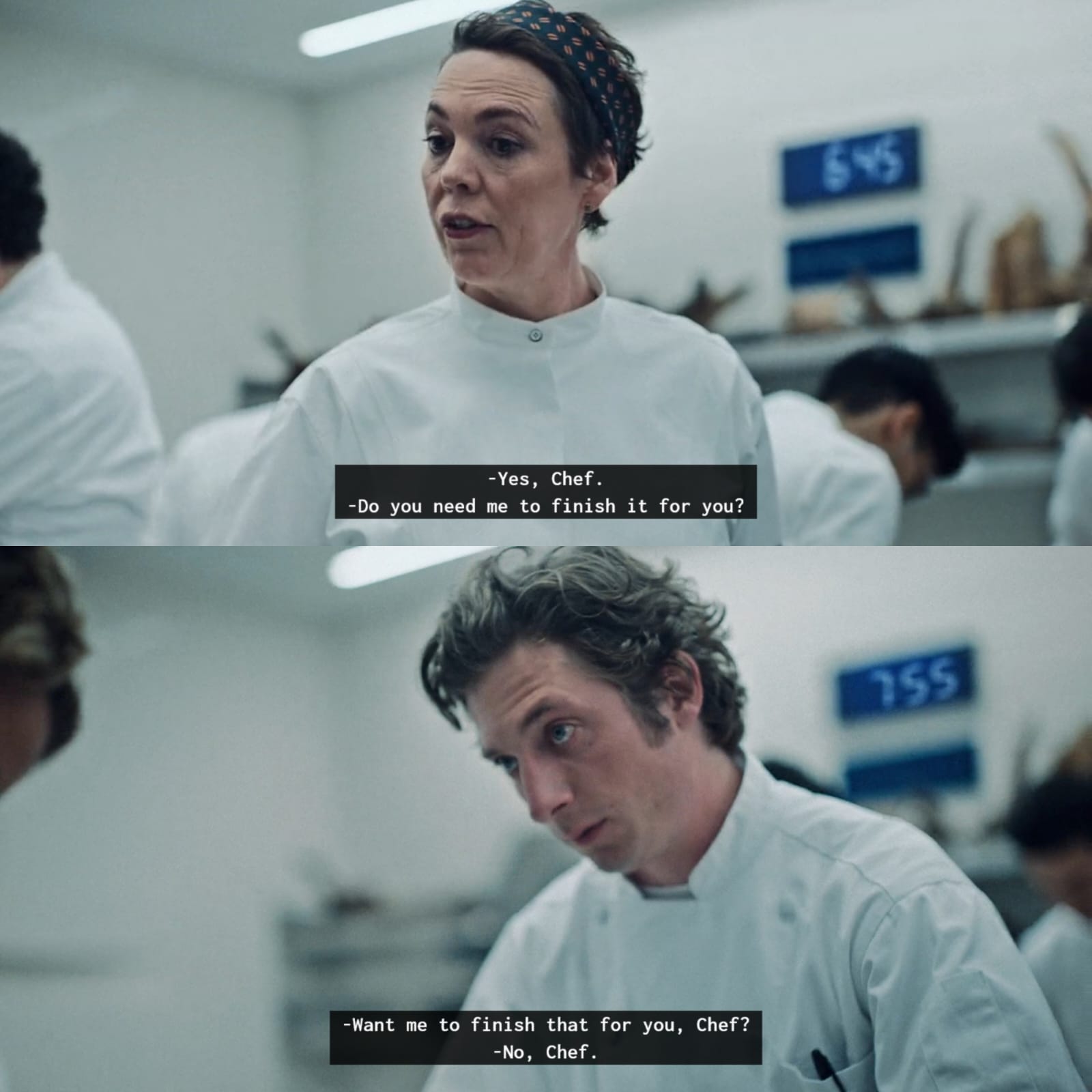
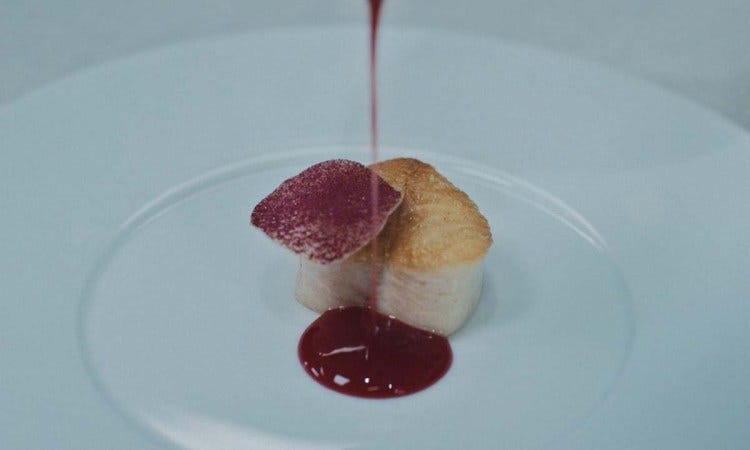
While in New York, Carmy works under an abusive Chef David who repeatedly berates Carmy in the kitchen and pushes him to go faster. Always hovering near his neck and whispering nasty little jibes. Carmy starts having panic attacks at this point and throughout the seasons he is seen to be taking antacids for his stomach issues. While working in the kitchen one day, Chef David steals and modifies a hamachi or young yellowtail fish entrée that Carmy was experimenting with and adds fennel making it his own. Carmy tastes the modified dish and finds it to be inferior, so he subs the fennel with a blood orange reduction and sends it out by the server anyway giving him an excuse of food allergen. And Sydney, eats the dish, while on a food trip to New York. Their fates were interlinked because Carmy chose his creative side over following orders just that time. I wish my rebellions had blood oranges in them but they mostly consisted of trying to work with proteins nobody believed would make a difference; they did in the end.
6. Blues and Beyond
The color blue appears throughout the show. I can attest that standing inside a cold room is a good way to sublimate anger about a failed experiment, a lab mate, a sous chef, or your boss. I had a habit of taking pictures of the clouds and sky on my way to work.

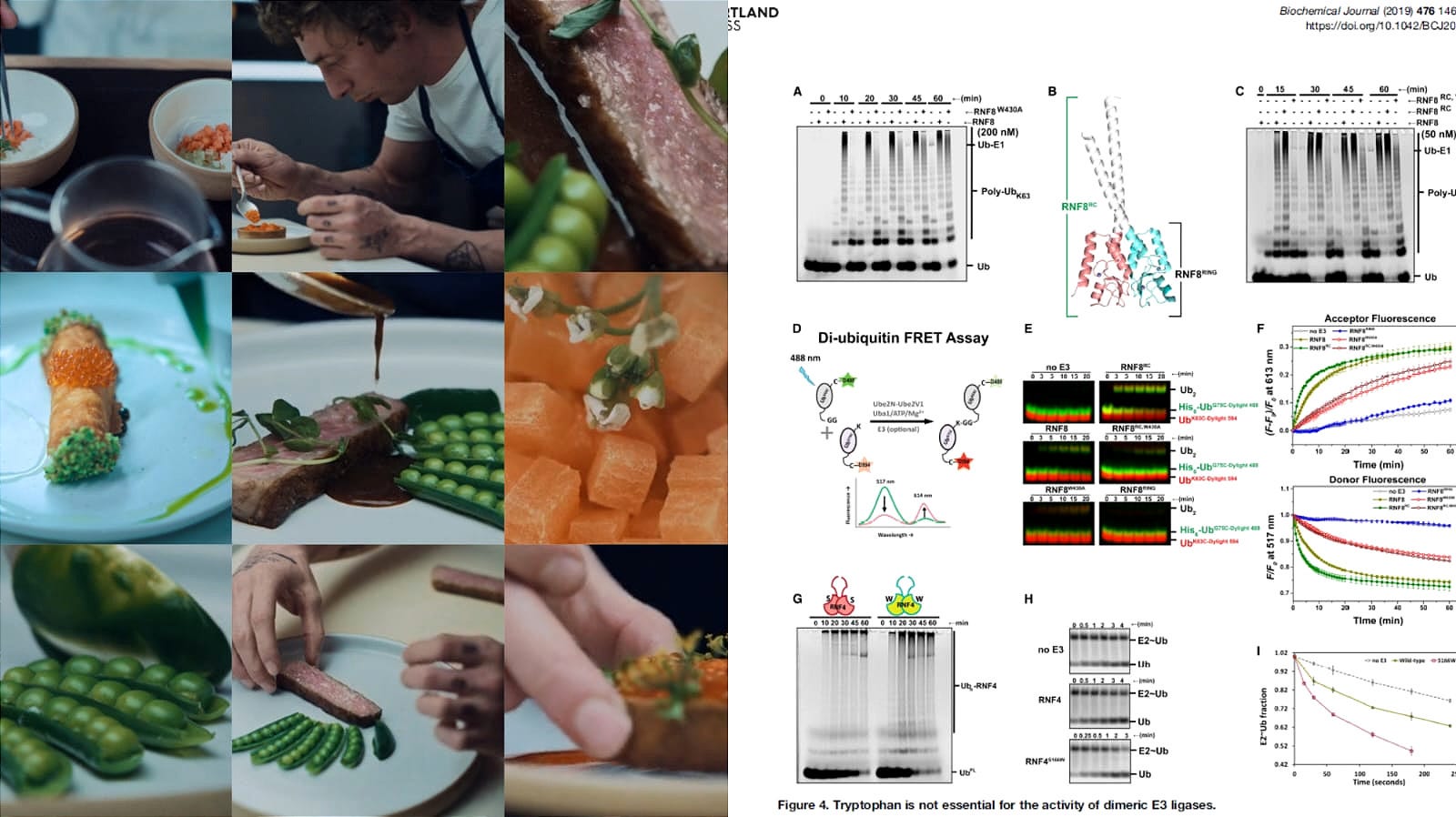
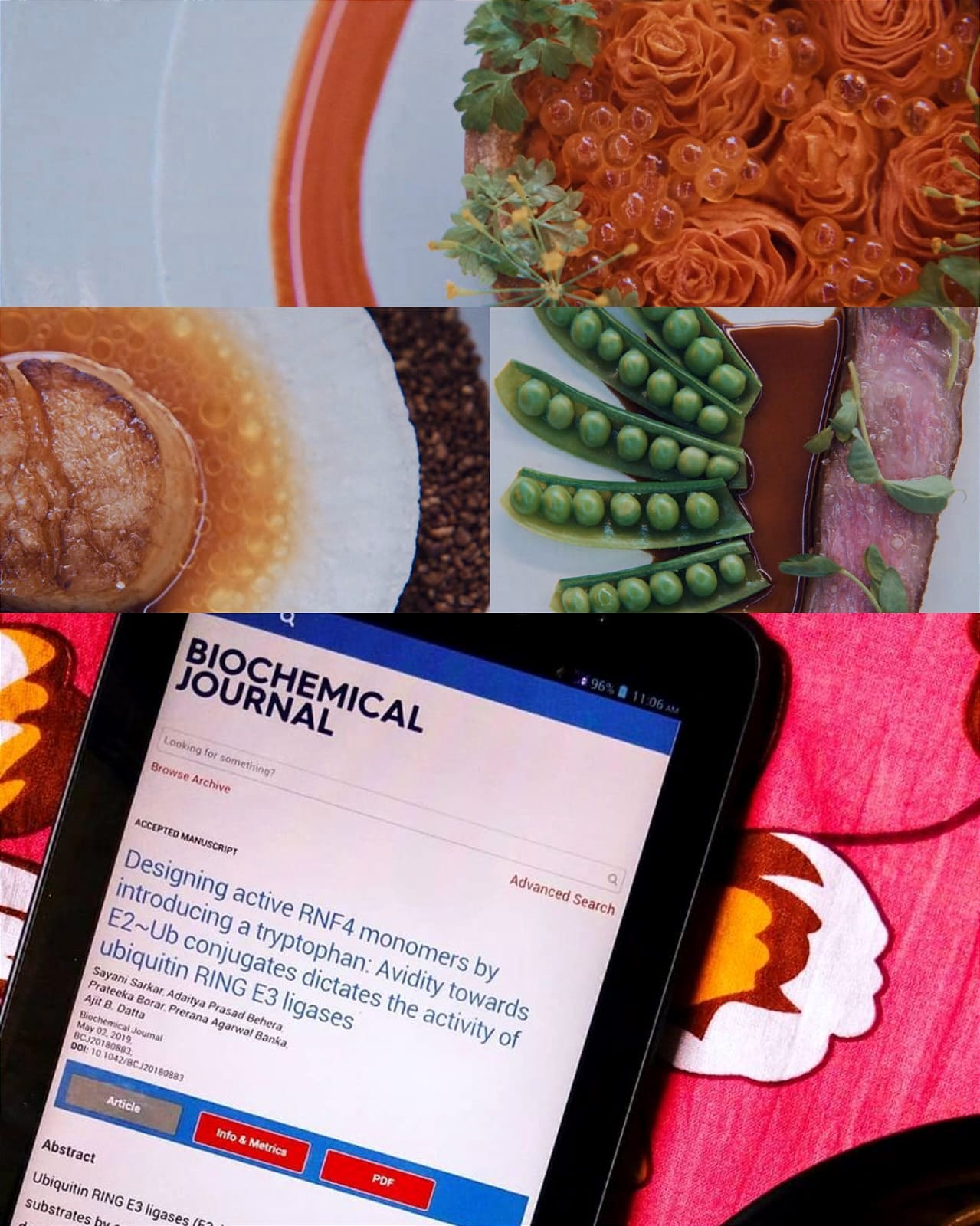
Carmen’s journey ends in the final season when he leaves the restaurant in the capable hands of Chef Sydney and to my surprise takes the same route I did after leaving the lab. He is now an intern at an architectural firm where he continues to pursue his love of art and creates beautiful things. I truly believe he likes being an intern just the way I like writing these days. These final dishes below from Bear and my final publication1 are a reminder of two synonymous worlds that are deeply satisfying and challenging at the same time.
Postscript:
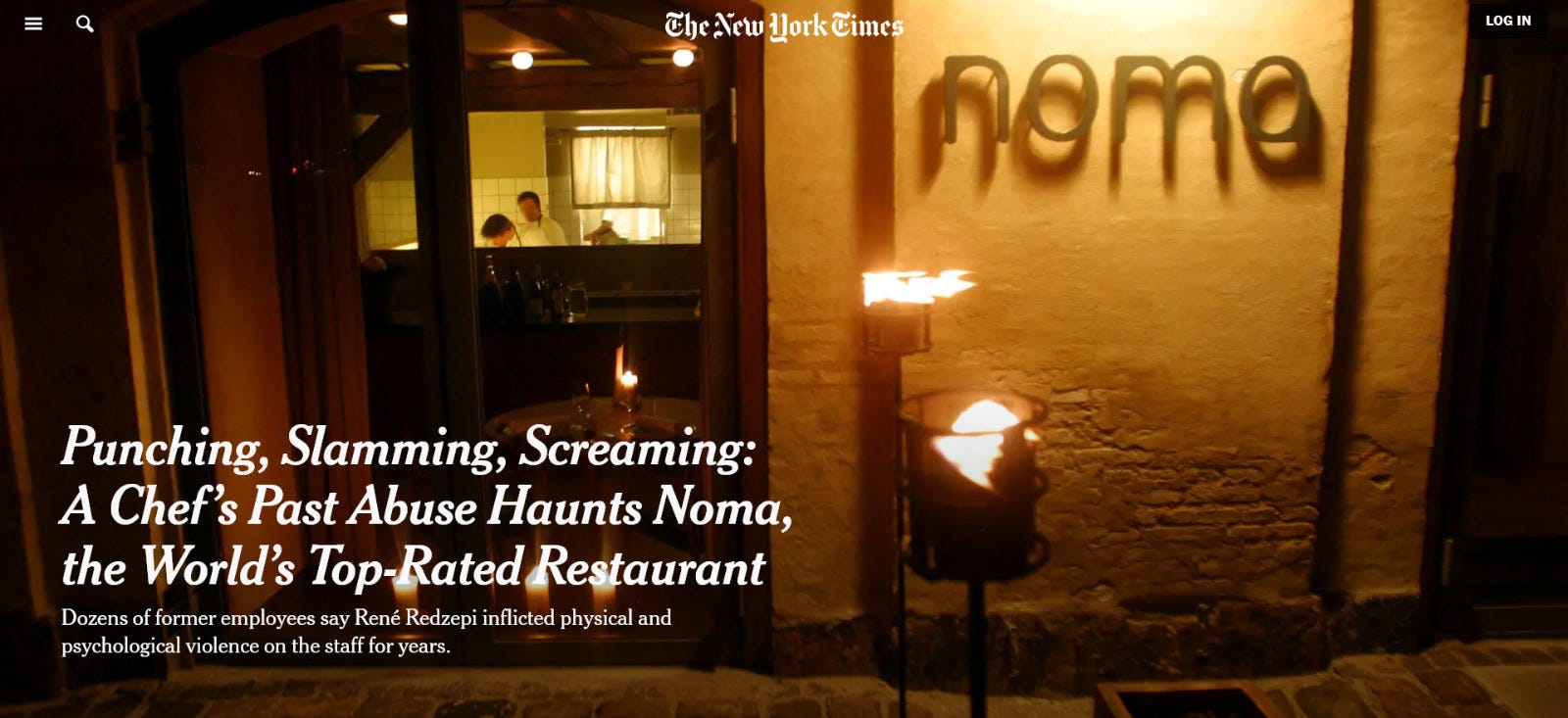
The relentless pursuit of perfection in these industries have fallout that have been analyzed ad nauseam elsewhere. But this particular news is relevant to this essay and the television show. Severe allegations of physical and psychological abuse were inflicted on staff by celebrity chef and founder of Noma, René Redzepi, the very restaurant featured in Bear where the actors went for training and production as well. Detailed accounts from 35 former employees detailing incidents between 2009 and 2017, including Redzepi punching workers, jabbing them with kitchen implements, and threatening to blacklist them from the industry was reported in the New York Times. Redzepi stepped down as executive chef but still remains active as the creative brain behind Noma.
This toxic culture was much more prevalent some twenty years ago both in academia and fine-dining restaurants where Michelin stars were gold standards and they gave people immunity for perpetuating the toxicity. Things have beginning to improve, people have the courage to speak up, but we have so much work to do to make these workplaces a space of safety, positive professional growth, and work satisfaction.
Biochemical Journal (2019) 476 1465–1482. https://doi.org/10.1042/BCJ20180883
This reminds me of this excerpt that I read of Traversal by Maria Popova this morning. Music, science, food, visual art... they all share a kind of poetry. You have expressed that here in photos and words.